Keynote Lectures
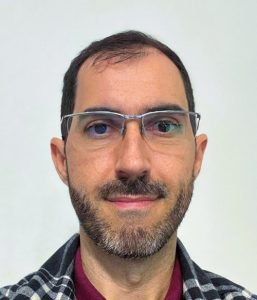
Keynote — AI-driven Networks, Architectures and Platforms for Advanced Energy Services
Alessandro Vizzarri, University of Rome Tor Vergata, Italy
Abstract:
The energy sector is undergoing a profound transformation driven by decentralization, electrification, and sustainability goals. In this context, AI-driven networks, architectures, and digital platforms are emerging as key enablers for a new generation of advanced energy services, capable of operating at scale, in real time, and across highly heterogeneous infrastructures.
This talk explores how artificial intelligence can be deeply embedded into communication networks, edge–cloud architectures, and service platforms to support intelligent energy systems, from smart grids and distributed energy resources to prosumers, electric mobility, and energy communities.
Biography
Dr. Alessandro Vizzarri received a degree in Electronic Engineering from the University of Bologna, a PhD in Telecommunication Engineering and Microelectronics from the University of Rome Tor Vergata, and a post-lauream diploma from the Superior Institute of Communication (Italian Ministry of Enterprises and Made in Italy, Rome). He is a Professor in Telecommunications at the University of Rome Tor Vergata (Italy).
He is/was a Manager Consultant for vendor, manufacturing, and consultancy companies operating in the ICT market, in particular wireless networks (UMTS/HSPA, LTE, WiFi,..), Broadcast Networks (DVB-S/T/H), Digital Transmissions, Project Management, Business Management. He is/was a Senior Project Manager in several research projects on ICT technologies at European and international levels.
His research interests include Wireless (5G/BY5G/6G), Non-Terrestrial (LEO/HAPS/UAV) and Broadcast Networks, Radio Network Planning, O-RAN, QoS/QoE, interoperability, Goal-oriented Semantic Networks, Blockchain and Web3 Security, Digital Economy, Entrepreneurship, Regulation and Standardization.
He is President of the Italian Association of Telecommunication Engineers (AICT) and a member of the Order of Engineers in Rome (Italy). He was the Professional & Career Activities Coordinator at the IEEE Italy Section.
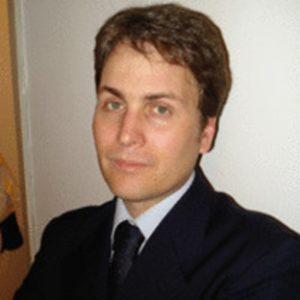
Keynote — From IEC Methods to IEEE Guidance: Cooperative Standardization for Relay Test Sets
Andrea Bonetti, Megger Sweden AB Stockholm, Sweden
Ms. Hong WANG (王宏 ), State Grid Corporation, China
Abstract:
Reliable protection testing requires results that are repeatable and comparable across utilities, manufacturers, and laboratories worldwide. Achieving this in practice increasingly depends on effective cooperation between standardization bodies—particularly IEC and IEEE—as protection testing evolves from classic analog injection to IEC 61850 process-bus testing and emerging digital-twin workflows.
This keynote presents IEEE P3416, Guide for Relay Protection Test Equipment (in final publication phase), as a concrete example of structured IEEE–IEC cooperation. The talk explains how experts active in both communities enabled systematic exchange of terminology, test concepts, and practical experience, allowing the guide to align with established IEC work while addressing the relay test set perspective. A central theme is how IEEE P3416 translates protection-function test methodologies from the IEC 60255-1xx functional standards for protection functions into actionable guidance for relay test set capability, test execution, and reporting—helping the industry “compare apples with apples” when verifying performance declared by relay manufacturers.
The keynote also highlights cooperative alignment around IEC 61850-based testing, where relay test sets publish sampled values and exchange GOOSE messages, and discusses why time synchronization must be treated as a defined test condition for both digital testing and analog end-to-end schemes. In addition, the talk addresses the metrological side of cooperation—verification and calibration practices, traceability and uncertainty concepts, and automated verification approaches—showing how consistent measurement foundations support credible protection testing across organizations and regions.
Finally, the keynote outlines where further joint progress is needed, including maturing topics such as dc protection testing and strengthening harmonization of metrological practices, and it discusses how collaboration between IEEE and IEC can accelerate the path from guides and technical specifications to deeper future standardization.
Biography
Andrea Bonetti is a senior specialist in power system protection and IEC 61850 applications based in Sweden. With a master’s degree in electrotechnical engineering from Sapienza University of Rome, Italy, he has over 30 years of experience in the field. Andrea has worked as an HV power system protection specialist at HV relay protection manufacturer Hitachi Energy Grid Automation Products (former ABB) in Västerås, Sweden for 18 years, and at Megger in Stockholm for 9 years as a product manager and technical specialist for relay test equipment and IEC 61850 test set and tools. He has also worked as a consultant in power system protection and IEC 61850 applications for 5 years. Andrea holds a patent in the area of IEC 61850 testing tools and algorithms.
Andrea is the chair of the TC 95, active member of the IEC TC 95/MT 4 and TC 95/WG 2 committees for standardization of protection functions and IEC 61850 application for protection. He has received the IEC 1906 Award in 2013 and is a guest lecturer at KTH (Royal Institute of Technology, Stockholm) for IEC 61850 for Substation Automation applications since 2008.
Andrea is a teacher for IEC 61850 for protection and control applications for the private Swedish University Lernia (Yrkeshögskola) since 2021, and also at STF for Reläskydd III – Idriftagning av reläskydd (commissioning of protection relays) from April 2024.
For a detailed profile, please connect with Andrea on LinkedIn (https://www.linkedin.com/in/bonetti-andrea/ )

Biography
Hong Wang received the M.Eng. degree in Electrical Engineering from Shandong University, China. She has over 20 years of experience in power electronic control development and relay protection applications.
She currently serves as a senior engineer at State Grid Corporation of China, where her work focuses on relay applications and relay test set testing. Her professional interests include relay metrology, automatic control, and digital twins.
She is Chair of IEEE PAR 3416. In addition, she serves as an Off-Campus Supervisor for the Master of Engineering at Shandong Jianzhu University and Shanghai University of Electric Power in the field of Information and Electrical Engineering.
She holds more than 20 patents related to electrical control and relay protection engineering.

Keynote — Non-Terrestrial Networks (NTN): A Massive Infrastructure in Space and Near-Space for Connectivity and Beyond
Halim Yanikomeroglu, Carleton University, Ottawa, Canada
Abstract:
NTN (non-terrestrial networks) refers to a 3D network with terrestrial, aerial, near-space (stratosphere), and space segments. NTN will facilitate ultra-connectivity for a broad range of use cases including sensing, imaging, edge intelligence, navigation, positioning, localization, intelligence, surveillance, reconnaissance, and more, in addition to very-high-speed communications. The overarching goal is to have a sustainable, reliable, resilient, intelligent, green/clean/eco-friendly, secure, ubiquitous & affordable, and ultra high-speed “network of networks”. This discussion will continue throughout the 2030s – exciting times indeed.
Biography
Dr. Halim Yanikomeroglu is a Chancellor’s Professor at Carleton University, Canada, and the Founding Director of Carleton-NTN (Non-Terrestrial Networks) Lab. He is among the handful of academics recognized for substantial and impactful contributions in all four layers of NTN: terrestrial, aerial (UAVs), near-space (HAPS), and space (satellites) networks. Dr. Yanikomeroglu has led several large-scale and high-profile collaborative research projects which have resulted in 43 granted patents (most of his IP have been successfully transferred to industry). He has coauthored a high number of papers in 33 different IEEE journals. He gives around 25 invited seminars, keynotes, panel talks, and tutorials every year. He supervised or hosted in his lab 185 postgraduate researchers. Dr. Yanikomeroglu is a Fellow of several scholarly societies, including IEEE, the Engineering Institute of Canada (EIC), the Canadian Academy of Engineering (CAE), Wireless World Research Forum (WWRF), and the Asia-Pacific Artificial Intelligence Association (AAIA); he served as a Distinguished Speaker for the IEEE Communications Society and the IEEE Vehicular Technology Society. He served as the General Chair, Technical Program Chair, and Steering Committee Chair/Member of several major international IEEE conferences as well as in the editorial boards of several IEEE periodicals. He is currently serving in various governance and leadership roles in the IEEE. Dr. Yanikomeroglu received several awards for his research, teaching, and service. He holds a BSc degree in electrical and electronics engineering from the Middle East Technical University (Türkiye), and MASc and PhD degrees in electrical and computer engineering from the University of Toronto (Canada).
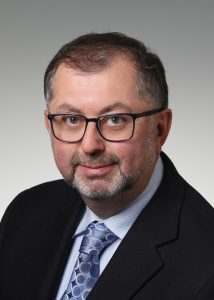
Keynote — From Energy Transition to Accelerating Disturbances : Origins, Correlation and Mitigation
Srdjan Skok, University North, Croatia
Abstract:
The ongoing transition of power systems toward decarbonization, digitalization, and decentralization — within a fully deregulated energy market — is fundamentally reshaping how electricity is generated, transmitted, and consumed. The convergence of renewables, battery energy storage, advanced power electronics, and market-based dispatch mechanisms has created a system of unprecedented dynamism and complexity. While this transformation is essential for achieving climate goals, it also introduces structural vulnerabilities and operational challenges that together form what can be described as the “Impossible Grid.” Recent widespread blackouts have highlighted the urgency of addressing these emerging risks. In June 2024, a major disturbance triggered cascading outages across Albania, Montenegro, Bosnia and Herzegovina, and Croatia, exposing coordination gaps in the regional system. On April 28, 2025, the Iberian Peninsula experienced a severe blackout, further raising concerns about the resilience of interconnected European grids under high penetration of inverter-based resources and cross-border market coupling. This keynote examines the origins and technical characteristics of such events, focusing on protection system coordination, operational planning in low-inertia environments, and the dynamic behavior of inverter-dominated generation under stressed conditions. Particular attention will be given to evolving disturbance mechanisms — including frequency instability, voltage sensitivity, control-layer interactions, and market-induced operational constraints — as well as the growing importance of real-time data, synchronized measurements, and advanced situational awareness. The session will further explore mitigation pathways, including modernization of grid codes, implementation of grid-forming technologies, enhanced dynamic stability assessment methodologies, strengthened regional cooperation frameworks, and strategic investments in flexibility, automation, and coordinated control architectures. Rather than viewing the “Impossible Grid” as an unsolvable paradox, this keynote argues that through integrated technical, regulatory, and operational strategies, it can be transformed into a resilient, adaptive, and intelligently managed energy ecosystem.Biography
Dr. Srđan Skok has been with the University North from 2017 as an Assoc. Professor at the Department of Electrical Engineering, Varazdin, Croatia (50%), and from 2023 he has been with the University VERN (20%). From 2022 he is senior advisor associate with Quanta Technology – Energy Solution Advisory Services.
Srđan Skok is founder, owner and director of Energoidea d.o.o. Energoidea d.o.o., Zagreb is a company founded in 2007, whose core business is research and experimental development in the field of electrical engineering. Srđan Skok has many years of experience in university education (30 years) and has passed all levels from assistant to associate professor. He organized new university programs, courses, laboratories, and he is author of university books with an emphasis on traditional power system theory as well as the use of Smart Grid technology.
He has successful 28 yearlong collaboration with industry as a leader of more than 100 international and domestic expert projects for major European, as well as for US, system operators and companies. Srđan Skok has published as author and co-author more than 150 scientific and professional papers (books, articles in journals and conferences and expert papers) relevant to the research area (WoSCC). He is also author of several books and book chapters.
Srđan Skok was principal investigator of several scientific projects, as well as leading person in preparing EU project application (HORIZON, domestic Research and Innovation programs, etc.). He is a Senior member of the IEEE and member of international CIGRE association and accordingly member of several past and ongoing working groups. He is a member of the Scientific Council for Petroleum Gas Industry and Energy of the Croatian Academy of Sciences and Arts.

Keynote — Enabling Digital Twins in Power Electronics: Trends and Hardware Considerations
Tiago Davi Curi Busarello , Federal University of Santa Catarina, Brazil
Abstract:
This speech introduces the concept of Digital Twins in Power Electronics, focusing on the technological trends and the hardware requirements that enable their practical implementation. Participants will explore modeling approaches, real-time simulation, Hardware-in-the-Loop (HIL) platforms, and data integration techniques used to create accurate and reliable digital representations of power electronic systems. The course emphasizes hardware constraints, computational performance, and real-time considerations essential for deploying Digital Twins in research and industrial applications.
Biography
Dr. Tiago Davi Curi Busarello has been a professor since 2016 at the Federal University of Santa Catarina, Brazil. He holds a PhD and a Master’s degree in Electrical Engineering from the State University of Campinas Brazil, obtaining the degrees in 2015 and 2013, respectively. He worked as postdoctoral researcher in 2022-2023 at the University of Vaasa, Finland. He was a visiting researcher during 2014 at the Colorado School of Mines, United States. He is a member of the IEEE (Institute of Electrical and Electronics Engineers) and a member of the IEEE Power Electronics Society. He is the editor of the book “Power Electronic Converters And Systems Volume 1 – Converters and machine drives and Volume 2 – Applications (IET, 2024). He is Associate Editor of the Brazilian Open Journal of Power Electronics and he serves as a reviewer for IEEE journal articles.